

Dr. Colin J. Brauner, University of British Columbia.
Adaptations and Acclimation to the Environment in Fishes: Integrating Basic and Applied Research.
Dr. Colin Brauner is the American Fisheries Society, Physiology Section “Award of Excellence” Recipient
Dr. Brauner is a Professor at The University of British Columbia (UBC). He obtained his Ph D from UBC, and then conducted a PDF at the University of Aarhus and the University of Southern Denmark. He then returned to Canada as a Research Associate at McMaster University before becoming an Assistant Professor at San Diego State University, California in 2000. In 2003 he returned to UBC as an Assistant Professor where he has remained.
Dr. Brauner investigates environmental adaptations (both mechanistic and evolutionary) in relation to gas-exchange, acid-base balance and ion regulation in fish, integrating responses from the molecular, cellular and organismal level. The ultimate goal is to understand how evolutionary pressures have shaped physiological systems among vertebrates and to determine the degree to which physiological systems can adapt/acclimate to natural and anthropogenic environmental changes. This information is crucial for basic biology and understanding how fish, which represent 50% of vertebrate species, can inhabit almost every aquatic environment on the planet. Best known for his fundamental work on the physiology of fishes, the impacts of his work are far reaching, by having direct applications in understanding the early evolution of vertebrates, fish conservation, aquaculture, aquatic toxicology and fisheries management. He has supervised over 70 B.Sc. research projects, 35 M.Sc. students, 16 Ph.D. students and 26 post-doctoral fellows. Among these, 14 have gone on to become Professors in Canada and around the world, each with their own well-established research programs.
Dr. Brauner has been co-editor of the multi-volume treatise “Fish Physiology” since 2000 and has received numerous awards including an honorary doctorate from the Autonomous University of the State of Mexico (2024) for career contributions to the field of aquatic biology and aquaculture. He has conducted research and been a co-instructor for international graduate courses in comparative physiology around the globe.

Dr. Erika Eliason, Fisheries and Oceans, Canada
Using Mechanistic Physiology to Inform Salmon Conservation.
Pacific salmon are an iconic species, sustaining ecological, cultural and economic systems throughout their range. Yet across the North Pacific, salmon face numerous conservation challenges arising from both natural (e.g. landslides) and anthropogenic (e.g. warming water temperatures, fishing) stressors. In this talk, I’ll describe how our team uses a mechanistic physiological approach to understand the drivers of several key conservation concerns. Examples include: 1) Why do some salmon successfully migrate to reach their spawning grounds while others fail? 2) Why do adult female salmon experience higher mortality rates than males? 3) Why do salmon die after release from a marine angling encounter? I will show how identifying the physiological mechanisms underlying these challenges has informed (or has the potential to inform) management actions aimed at improving salmon conservation outcomes.
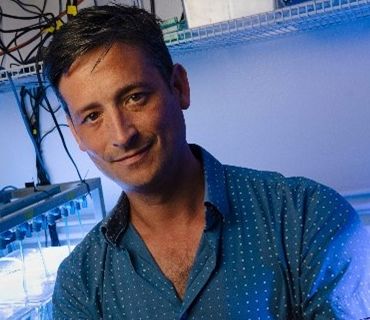
Dr. Martin Tresguerres, University of California, San Diego
From Shark Gills to Coral Reefs: Discovering Mechanisms and Developing Solutions.
My research has progressed from ion and acid-base regulation in crabs and sharks, to cellular ion transport mechanisms in the gill, to the molecular basis of acid-base sensing. It is particularly meaningful to give this plenary at ICBF, where I first presented many of these mechanistic discoveries. What started as a specialized question in fish physiology ultimately revealed broadly conserved and evolutionarily recurrent mechanisms with implications extending far beyond fishes.
By integrating comparative physiology, cellular and molecular biology, evolutionary biology, and field-based environmental research, we have since explored how ion transport and acid-base sensing mechanisms have been repeatedly co-opted and diversified across evolution to regulate biomineralization, symbiosis, and other foundational biological processes. More recently, this work has expanded into symbiogenesis and the emergence of novel biological complexity with global biogeochemical relevance.
Through transdisciplinary collaborations, I have conducted field work across tropical coral reefs, temperate coastal ecosystems, and Antarctica to investigate how these mechanisms shape organismal responses to environmental change, including ocean acidification, coral bleaching, microbiomes, early detection of physiological stress, and restoration strategies, while also uncovering mechanisms potentially relevant for translational medicine.
As I write this abstract, these connections appear almost unavoidable. But early on, I had little idea where those questions would lead. Doing fundamental mechanistic research is often slow and nonlinear because we cannot intentionally search for mechanisms we do not yet know exist. However, this is what turns fundamental biology into a foundation: without mechanistic understanding, prediction, restoration, and intervention become a house of cards. That foundation will never be complete, and the research needed to strengthen it never ends. Today, new technologies, computational approaches, and artificial intelligence provide unprecedented opportunities to accelerate mechanistic discovery and inform higher levels of understanding, prediction, and intervention.

Dr. Chris Wood, McMaster University and University of British Columbia
The Importance of Mechanistic Physiology in Addressing Real-World Problems.
Over the last decade, I have sensed a drift away from mechanistic physiology as the emphasis has moved more to descriptive physiology to address the predicted impacts of climate change, an existential real-world problem. For example, laboratory tests of swimming performance, temperature tolerance and hypoxia responses have tended to focus on metrics defining failure (e.g. Ucrit, CTmax, Pcrit), rather than on understanding why failure occurs. In this talk, I will argue that there is an important role for mechanistic physiology in addressing real-world problems, from my own experience where this approach has already resulted, or hopefully will result, in legislative or industrial changes. This is because mechanistic understanding is very convincing to industry scientists, regulators, and legislators. Examples will include research on the physiological mechanisms by which: (i) acid rain kills fish, which led to the amendments in 1991 to the U.S. Clean Air Act, thereby limiting SO2 and NOx emissions; (ii) waterborne metals kill fish, which led to the acceptance of the Biotic Ligand Model (BLM) concept by the U.S. EPA, and the subsequent worldwide adoption of the BLM as a regulatory tool supported by industry and governments; (iii) increasing salinity impacted the physiology of fish in the largest lake in China, which led to dramatic changes in way that the government manages freshwater supply to the lake; (iv) road salt kills baby salmon, which may result in improved salting strategies; (iv) current practices induce nephrocalcinosis (kidney stones), a devasting welfare and economic issue in salmonid aquaculture, and how this can be prevented.